Foresite Catalyst
MXDR for Google Cloud
From AI-driven SecOps to cloud security automation, Foresite delivers fully managed and scalable security solutions tailored for enterprise, hybrid, and multi-cloud environments.
From our Adaptive Security Model to our Google Cloud & Wiz Premier Partnerships, we combine deep expertise, purpose-built technology, and customer-first flexibility.
Combine Google’s native security power with Foresite’s expert-driven, AI-powered operations to secure your cloud and unlock business growth.

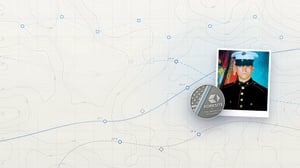
Part of Foresite's The Mission Endures series, marking Veterans Day.
From 2001 to 2005, I served in the United States Marine Corps as a Tactical Network Specialist. I deployed to Iraq with the 1st Marine Division, through Operation Iraqi Freedom and into Operation Phantom Fury. My official job was keeping networks running. In practice, I worked two jobs, and both came down to the same thing: getting the right information to the right people before it was too late.

The first was inside the Tactical Movement Coordination Center, where I helped track and coordinate movements across the area of operations. Convoys and patrols needed to know what was ahead of them, and command needed to know where everyone was.
The second was running the intelligence website that supported those movements. It was the shared picture: known threats plotted along the routes, updated as new reporting came in, available to every unit that needed it. When something changed, I coordinated with command and quick reaction forces so that a report became a response, not just a data point.
Neither job was in my original training. Both were what the mission needed, so I learned them and owned them.
In that environment, the quality of the information determined the quality of the response. A report that was late, incomplete or unclear was only marginally better than none. And a picture that wasn't shared was a picture that didn't help anyone.
That's why I look at cybersecurity the way I do. An alert without context isn't intelligence, and a detection no one owns isn't protection. The value is in getting the right information to the right people, fast enough to act on it.
Operations ran around the clock, and no one person could carry them alone. Watches rotated and teams turned over, but the mission continued regardless of who was on duty. What made that possible was a disciplined handoff: a clear picture of the current state, the open risks and who owned what. Done well, the person coming on watch picked up without missing a beat. Done poorly, things fell through the gaps, and the gaps had real consequences.
I see the same principle every day at Foresite. Much of my work happens before a customer's first alert ever fires: understanding their environment, defining what success looks like, and making sure what we learned during scoping reaches the engineers who will run it. When that handoff is clean, the team picking up the mission starts with the customer's priorities, their architecture and their expectations from day one. When it isn't, customers repeat themselves, assumptions go unchecked, and gaps open that an adversary doesn't need long to find.
Adversaries don't keep business hours, and a customer's security can't depend on any one person being at their desk. That continuity starts during onboarding. In our managed SOC service, it supports 24/7 monitoring and response. Across those responsibilities, analysts, engineers and architects need a shared plan and a clear picture of the customer's environment.
For veterans, the mission has never been about one person or one rotation. It's about being relied on by the people beside you and the people you serve. That commitment didn't end when I took off the uniform. It found a new terrain.
I'm proud to carry it into my work at Foresite, and grateful to work alongside colleagues who share it. To every veteran and service member: thank you. To our customers: the mission endures, and so do we.
Have you served, or are you serving now? If you’re a Foresite customer or partner, we’d be honored to send you a Mission Endures challenge coin.
Available while supplies last.